

POSSESSION
POSSESSION
Bored of tutorials? Great! Possession only has one control, your joystick or keyboard. Best thing is, you probably already know how to play it.
THE CONCEPT
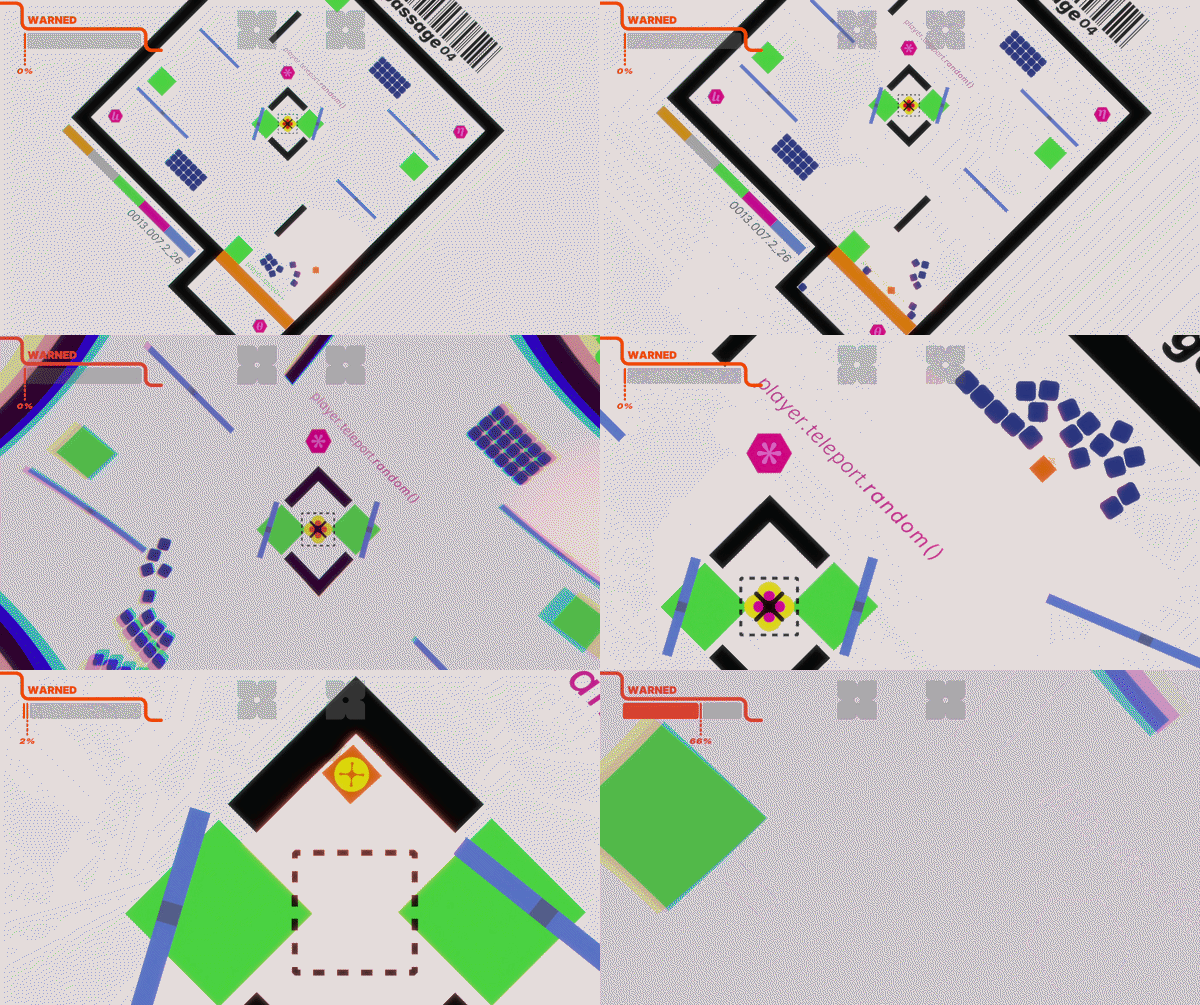
POSSESSION is an arcade-style game of chase, tag, or whatever you called it as a kid. The rules are simple: collect the star at the centre of the map and avoid being tagged. While in possession of the star, your meter gradually fills. Hold onto it long enough to fill the meter and win the round.
POSSESSION began as a short break from the development of Rusted Veins, expanding on a simple concept originally created for a university assignment. My goal was to take an incredibly straightforward gameplay loop and iterate on it until it felt polished, responsive, and ready to ship.
Playtesting became a major part of this process. New players were able to understand the game almost immediately and compete with players who had already spent weeks with it. This accessibility, combined with the competitive nature of stealing and defending possession, became one of the game's greatest strengths.
UI and Aesthetic
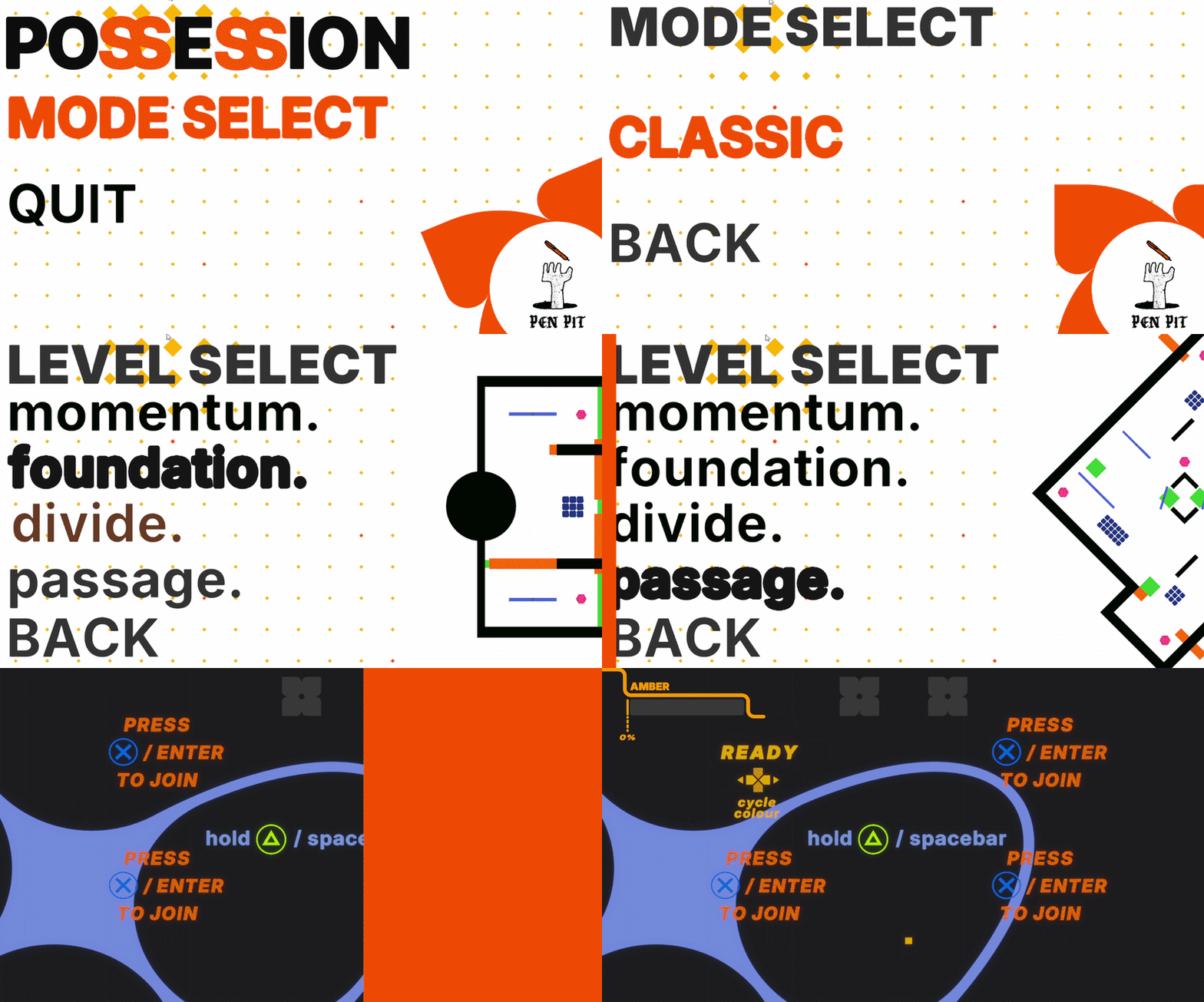
POSSESSION’s visual identity was designed to be simple, bold, and immediately readable, using strong colours and removing unnecessary visual clutter or text. My goal was to create an interface intuitive enough that even someone with little to no experience using a controller (my mum) could navigate the menus and understand the game without explanation.
As development continued, the project became a study in UI/UX and graphic design, exploring how layout, colour, animation, and visual feedback can communicate functionality while maintaining a strong and consistent visual identity.
Level Design
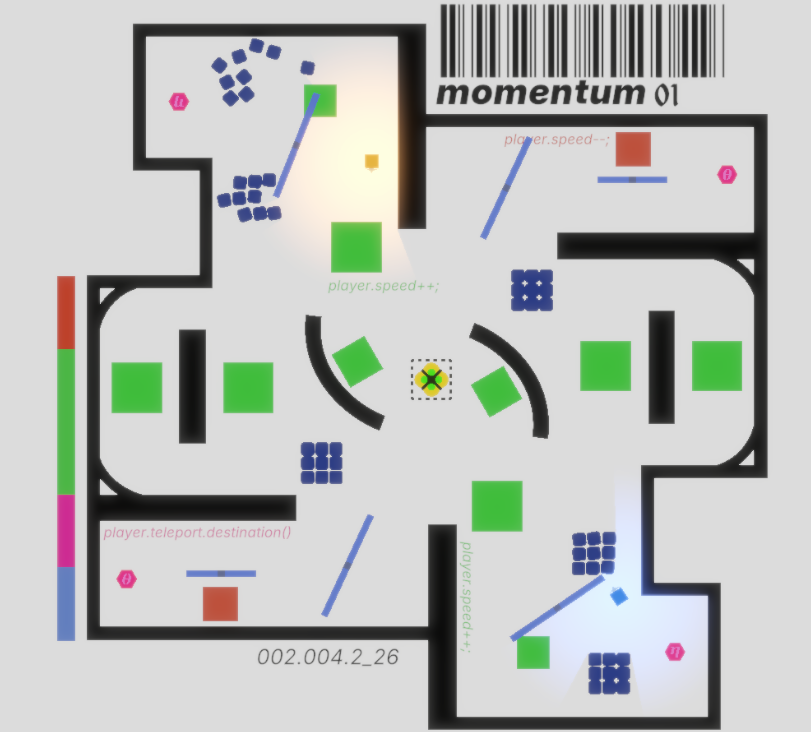
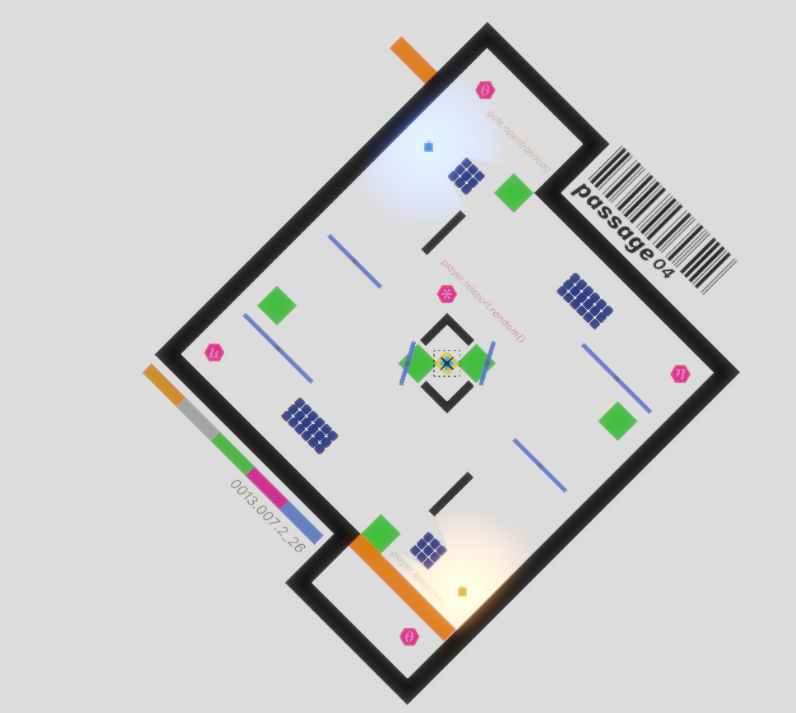
The key goal of POSSESSION’s level design was to allow players to move freely and quickly while ensuring every obstacle and gameplay element was instantly readable. Each mechanic was given a distinct colour language: dash pads are green, slow pads are red, portals are pink, and gates are orange.
To reinforce their purpose without relying on a traditional tutorial, each element is paired with a code-inspired environmental decal. For example, dash pads are labelled player.speed++ using the same green as the pad itself. By combining consistent colour coding with environmental instructions, players can learn each mechanic naturally during play, removing the need for lengthy tutorials or additional UI.
First Draft
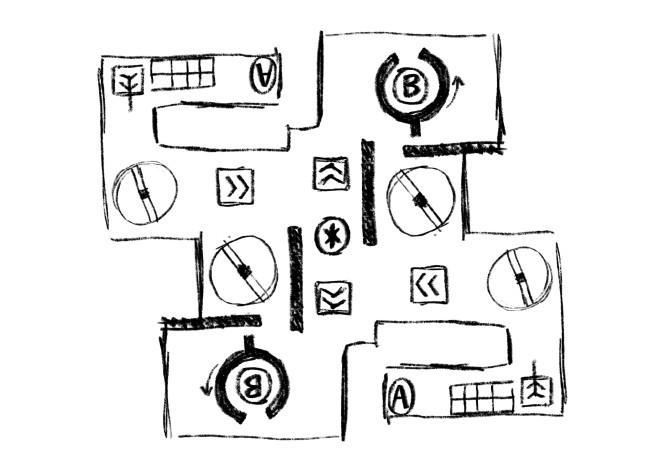
Each level is first planned with a symmetrical layout to ensure that every player has equal access to routes, obstacles, and opportunities regardless of their starting position. This creates a balanced foundation before additional gameplay elements are introduced.
During playtesting, obstacles also created an unexpected form of emergent gameplay, functioning much like a table in a playground game of tag. Players would circle around them, predicting each other’s movement and changing direction to gain an advantage. This turned simple level geometry into an important part of the chase itself.
Level Aesthetic
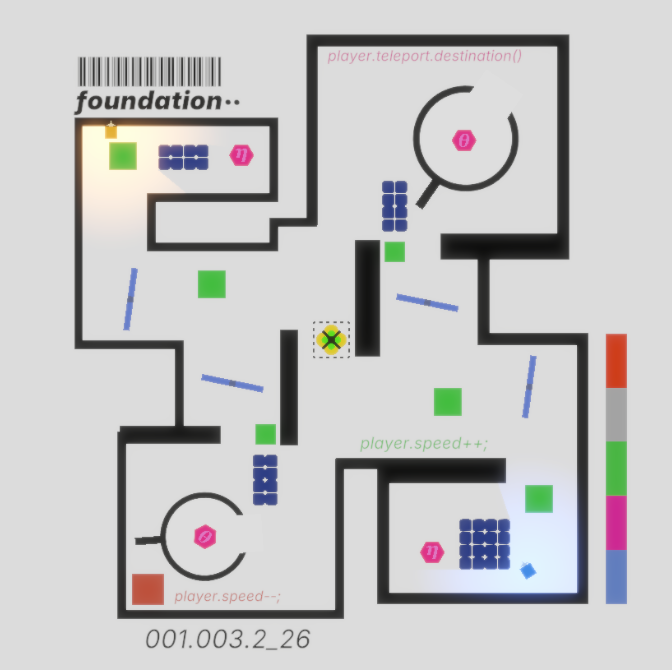
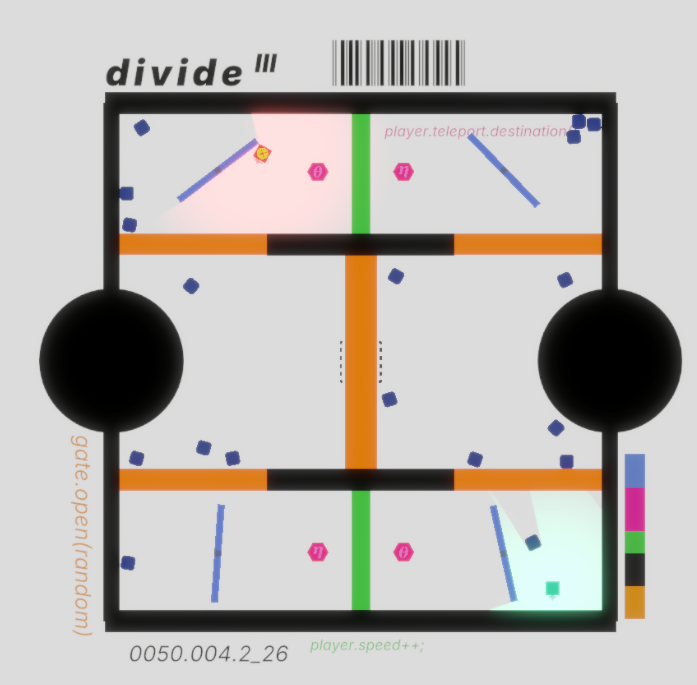
With such simple geometry throughout the game, I took inspiration from packaging labels and industrial graphic design to give each level its own visual identity. Barcodes, identification names, and graphic markings were added to distinguish each map while remaining consistent with POSSESSION’s minimalist aesthetic.
Each level also features a colour code representing the primary obstacles and mechanics found within it, allowing the visual design to communicate information about the level before and during play. This approach quickly became popular with playtesters and helped establish a distinctive visual language for the game.
Gameplay Overview
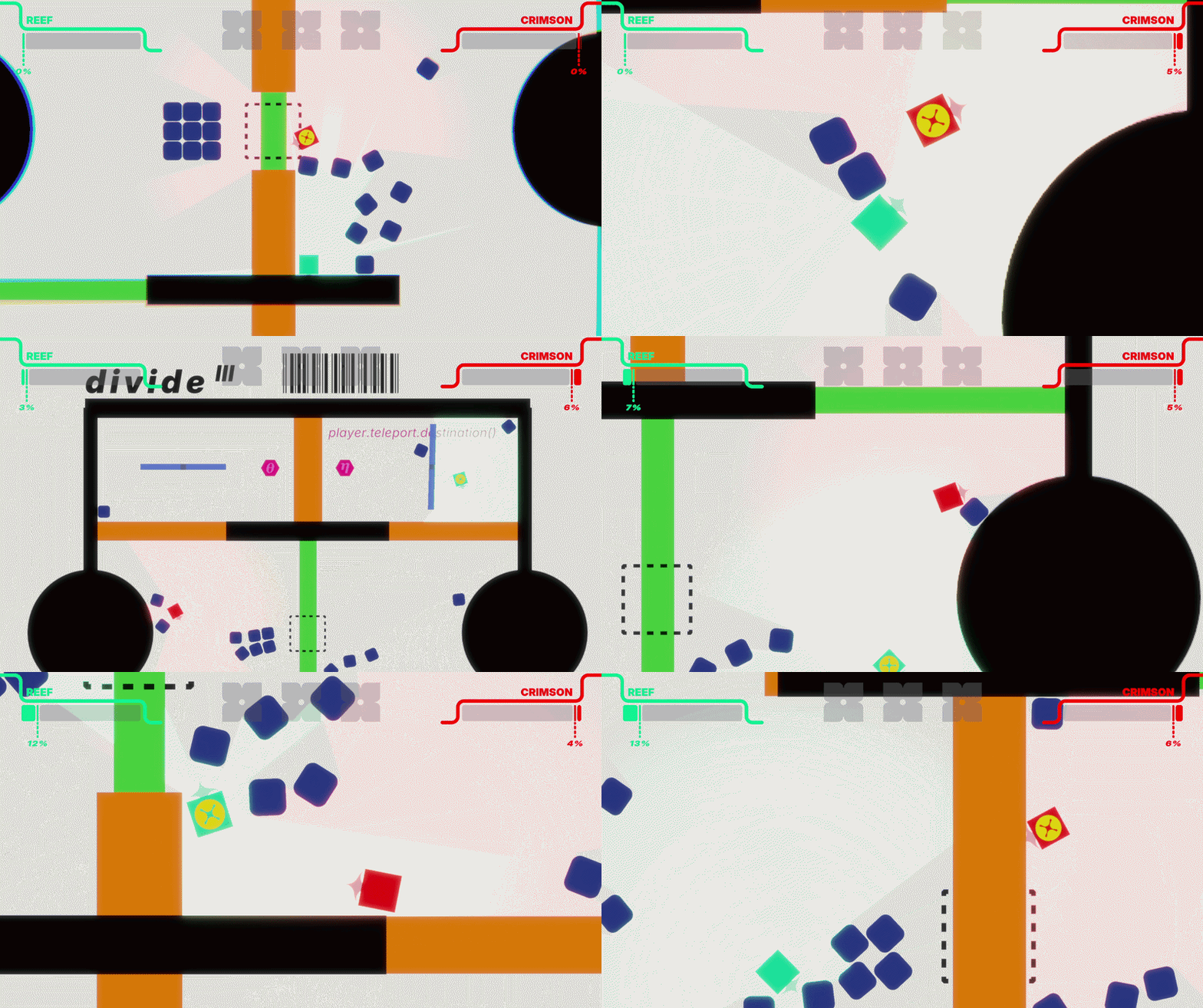
The game’s simple design made it highly accessible to players of all experience levels. During playtesting, players quickly understood the core mechanics, with matches naturally becoming fast-paced and competitive and often leading to immediate rematches.
The response was strong enough that I expanded the game from its original player count to support four-player local multiplayer, allowing POSSESSION to better embrace the chaotic and social nature of a party game.
In Development
POSSESSION is still in active development, with additional levels, obstacles, and gameplay mechanics being introduced. Thanks to the game’s simple and modular design, new ideas can be quickly prototyped, playtested, and refined, allowing the gameplay to evolve through rapid iteration.
POSSESSION is currently planned for release on Steam in late 2026.
Coming to
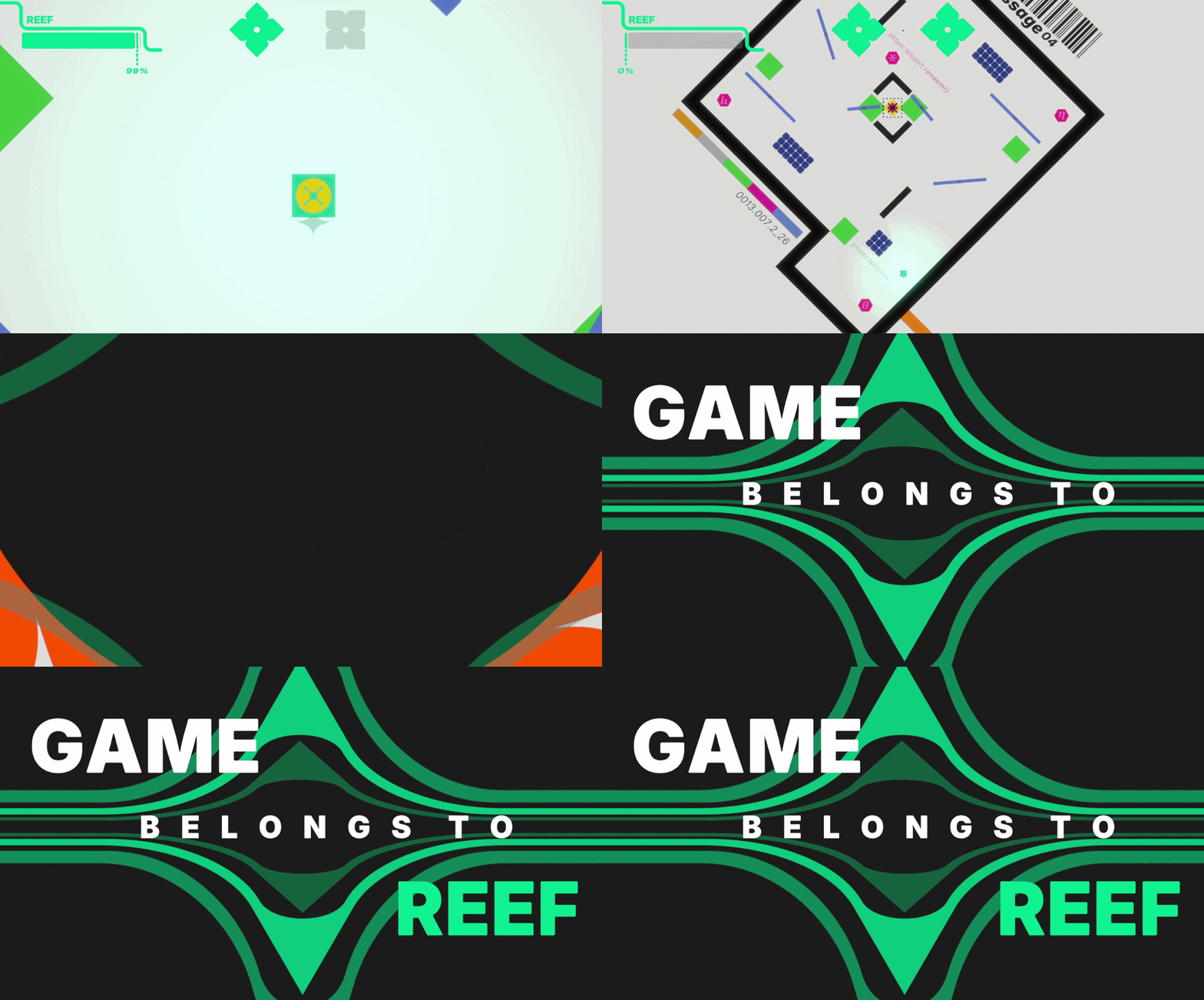
STEAM Soon!!
With possession reaching the final polish of its Alpha version,
POSSESSION will be coming to steam late 2026!!
Interested?
If you like any of the work feel free to shoot me an email or SMS, and we can figure out how to move forward with your project.
Reach out
alfonsolafosse.creative@gmail.com
@alfonsolafosse.creative
(+61) 423 159 850



POSSESSION
POSSESSION
Bored of tutorials? Great! Possession only has one control, your joystick or keyboard. Best thing is, you probably already know how to play it.
THE CONCEPT
POSSESSION is an arcade-style game of chase, tag, or whatever you called it as a kid. The rules are simple: collect the star at the centre of the map and avoid being tagged. While in possession of the star, your meter gradually fills. Hold onto it long enough to fill the meter and win the round.
POSSESSION began as a short break from the development of Rusted Veins, expanding on a simple concept originally created for a university assignment. My goal was to take an incredibly straightforward gameplay loop and iterate on it until it felt polished, responsive, and ready to ship.
Playtesting became a major part of this process. New players were able to understand the game almost immediately and compete with players who had already spent weeks with it. This accessibility, combined with the competitive nature of stealing and defending possession, became one of the game's greatest strengths.
UI and Aesthetic
POSSESSION’s visual identity was designed to be simple, bold, and immediately readable, using strong colours and removing unnecessary visual clutter or text. My goal was to create an interface intuitive enough that even someone with little to no experience using a controller (my mum) could navigate the menus and understand the game without explanation.
As development continued, the project became a study in UI/UX and graphic design, exploring how layout, colour, animation, and visual feedback can communicate functionality while maintaining a strong and consistent visual identity.
Level Design
The key goal of POSSESSION’s level design was to allow players to move freely and quickly while ensuring every obstacle and gameplay element was instantly readable. Each mechanic was given a distinct colour language: dash pads are green, slow pads are red, portals are pink, and gates are orange.
To reinforce their purpose without relying on a traditional tutorial, each element is paired with a code-inspired environmental decal. For example, dash pads are labelled player.speed++ using the same green as the pad itself. By combining consistent colour coding with environmental instructions, players can learn each mechanic naturally during play, removing the need for lengthy tutorials or additional UI.
First Draft
Each level is first planned with a symmetrical layout to ensure that every player has equal access to routes, obstacles, and opportunities regardless of their starting position. This creates a balanced foundation before additional gameplay elements are introduced.
During playtesting, obstacles also created an unexpected form of emergent gameplay, functioning much like a table in a playground game of tag. Players would circle around them, predicting each other’s movement and changing direction to gain an advantage. This turned simple level geometry into an important part of the chase itself.
Level Aesthetic
With such simple geometry throughout the game, I took inspiration from packaging labels and industrial graphic design to give each level its own visual identity. Barcodes, identification names, and graphic markings were added to distinguish each map while remaining consistent with POSSESSION’s minimalist aesthetic.
Each level also features a colour code representing the primary obstacles and mechanics found within it, allowing the visual design to communicate information about the level before and during play. This approach quickly became popular with playtesters and helped establish a distinctive visual language for the game.
Gameplay Overview
The game’s simple design made it highly accessible to players of all experience levels. During playtesting, players quickly understood the core mechanics, with matches naturally becoming fast-paced and competitive and often leading to immediate rematches.
The response was strong enough that I expanded the game from its original player count to support four-player local multiplayer, allowing POSSESSION to better embrace the chaotic and social nature of a party game.
In Development
POSSESSION is still in active development, with additional levels, obstacles, and gameplay mechanics being introduced. Thanks to the game’s simple and modular design, new ideas can be quickly prototyped, playtested, and refined, allowing the gameplay to evolve through rapid iteration.
POSSESSION is currently planned for release on Steam in late 2026.
Coming to STEAM Soon!!
With possession reaching the final polish of its Alpha version,
POSSESSION will be coming to steam late 2026!!
Interested?
If you like any of the work feel free to shoot me an email or SMS, and we can figure out how to move forward with your project.
Reach out
alfonsolafosse.creative@gmail.com
@alfonsolafosse.creative
(+61) 423 159 850